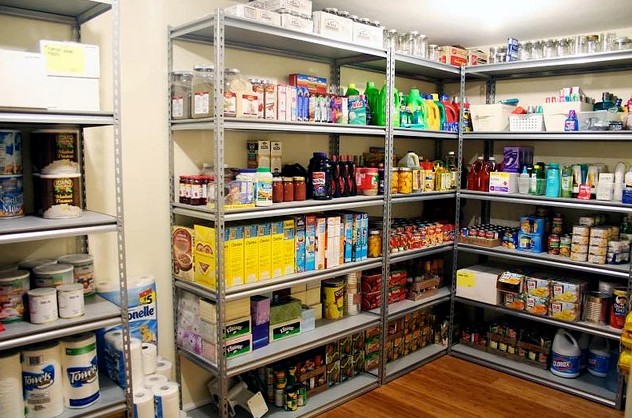
Preparedness is usually written for households with spare money. Most of the useful measures cost very little, and a few of them save money outright.
What can fifty dollars actually buy?
More than most gear lists suggest. Water containers, a thermometer, batteries and a stocked shelf of food you already eat.
The expensive parts of preparedness are the parts that get photographed. The parts that work are jugs, an appliance thermometer, a headlamp each and a deeper pantry, and none of that is a purchase so much as a slightly different weekly shop. A household that spends fifty dollars in the right order is better placed than one that has spent eight hundred on a generator it has never started.
Nothing here is financial advice and none of us is qualified to give it. This is about household stores and habits rather than about money management.
The order to spend in
Cheapest and most used first. Every item below is ahead of anything that needs fuel or maintenance.
- Water containers you can lift, filled. Roughly ten dollars for several gallons of capacity.
- Two appliance thermometers, one for the refrigerator and one for the freezer. Around five dollars each and they decide what gets thrown away.
- A headlamp per person and batteries by date. Perhaps forty dollars for a household of four.
- A deeper pantry, built by buying two of what you already buy one of. This costs nothing extra over a month because you eat it.
- A hundred dollars in small bills, held as equipment rather than as savings.
That is the whole of the first tier and it is where the return is. A household that stops here has covered the events that actually recur.
Why stored food is the cheapest buffer you own
Because it is money you were going to spend anyway, held in a form that also protects you. It is the only preparation with a genuine financial return.
| Measure | Rough cost | How often it gets used | Does it save money? | Priority |
|---|---|---|---|---|
| Deeper pantry of normal food | Nothing over a month | Every week | Yes, buying ahead of price rises | First |
| Stored water in jugs | 10 to 30 dollars | Every outage | Neutral | First |
| Thermometers | 10 dollars | Every outage, and daily | Yes, prevents needless discarding | First |
| Headlamps and batteries | 40 dollars | Several times a year | Neutral | First |
| Small bills held back | 100 dollars of your own money | Rarely, then critically | Neutral | Second |
| Camp stove and fuel | 60 to 150 dollars | Occasionally, plus camping | Neutral | Second |
| Generator | 500 dollars and up | Rarely, and needs maintenance | No, plus fuel and servicing | Last |
The trade is real and worth naming. Building stores requires money now for a benefit later, which is precisely the thing a tight budget cannot do. The way around it is to build the buffer out of purchases you were making anyway, one extra tin at a time, which turns a capital cost into a rounding error.
Expert note from Renata Sowell, water and evacuation editor
Buy one extra of something shelf stable every shopping trip. One tin, one bag of rice, one bottle of oil. In four months you have two weeks of food and you have never once had a week where the shop cost noticeably more. Every household I have seen do this has stuck with it, and almost nobody who tried to build it in one trip has.
What does a downturn actually do to a household?
It removes flexibility before it removes income. The buffer that matters is the one that lets you not buy something at a bad moment.
- Food you already own is food you do not buy at this week’s price. That is the whole mechanism and it is why stores are a financial instrument as much as a preparedness one.
- A working vehicle and a full tank keeps a job reachable, which matters more than almost anything else on this list.
- Maintenance deferred is expense multiplied. The furnace serviced in September is far cheaper than the furnace failed in January.
- Skills replace purchases slowly but permanently. Sharpening, basic repair and preserving each remove a recurring cost.
Expert note from Dan Brackett, founder and former distribution lineman
Service the heat before winter, every year, whatever else is tight. I have been in more cold houses than I can count and a good share of them were not power failures at all. They were a furnace that had been making a noise since October.
What should you not buy?
Anything that costs money to own. Equipment with fuel, maintenance or expiry is a recurring bill disguised as a purchase.
- Generators, before the basics. Fuel, oil, servicing and storage, for an event a household may see twice a decade.
- Long life bucket food as the base of the pantry. High cost per calorie and it never enters the rotation, which is covered in building two weeks of food you will actually eat.
- Subscription anything. A recurring charge for preparedness is the opposite of resilience.
Federal guidance on preparing financially, including document checklists, is at Ready.gov, and how modern shortages actually behave is in how supply disruptions actually unfold.