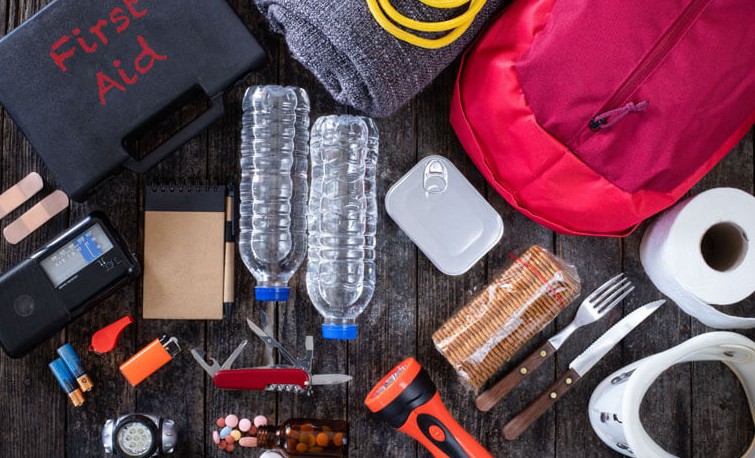
The useful preparations are unglamorous: keeping prescriptions ahead, owning a kit that is not mostly plasters, and having somebody in the house who has taken a class.
Can you make your own antibiotics at home?
No. There is no home preparation that substitutes for a prescribed antibiotic, and treating a serious infection with one is how a manageable problem becomes a hospital admission.
We are stating this plainly because the internet is full of the opposite claim and it predates this site. Garlic, honey, silver, oregano oil and the rest have a long folk history and no capacity to treat a systemic bacterial infection. Honey has genuine evidence behind it as a topical dressing for minor wounds and that is where the evidence stops. Nothing in a kitchen reaches a bloodstream at a therapeutic dose.
The preparation that actually works is boring and available to everybody: keep the prescriptions you already have ahead of schedule, and know how to reach a clinician when the roads are bad. Nothing on this site is medical advice, and this page in particular is a description of preparation rather than of treatment.
Staying ahead on medication
This is the single highest value action in household preparedness and it costs a phone call.
- Ask your pharmacy about an early refill ahead of a forecast event. Many will do it and almost nobody asks.
- Keep a written list of every medication, dose and prescriber. Pharmacies can work from that when systems are down and memory cannot.
- Know which of yours needs refrigeration, and what the manufacturer says about time out of the fridge. Insulin in particular has published limits worth reading before you need them.
- Keep a two week buffer if your plan allows it, and rotate it like food rather than letting it expire in a drawer.
Expert note from Renata Sowell, water and evacuation editor
Register anyone with a medical dependency on power with the utility and with your county. Both keep lists, both are underused, and being on them is the closest thing to priority that exists for a private household during a restoration.
What belongs in a kit that is not mostly plasters?
Bleeding control, wound cleaning, burns and the ability to keep somebody warm. Adhesive bandages are the least important thing in the box.
| Category | What we keep | Why | What comes in the shop kit instead |
|---|---|---|---|
| Bleeding | Trauma dressing, roller gauze, tourniquet if trained | The only category where minutes matter | Thirty small adhesive bandages |
| Wound cleaning | Saline in squeeze bottles, gauze, tape | Irrigation prevents more infection than any ointment | One tiny antiseptic wipe |
| Burns | Cling film and clean water | Cooling then covering is the whole of the field treatment | Burn gel of uncertain value |
| Warmth | Foil blanket and a real blanket | Shock and cold weather both take heat away fast | Nothing |
| Barrier | Nitrile gloves, several pairs | For your protection and for the wound | One pair, or none |
| Documentation | Pen, paper, the household medication page | Anything you write down is handed over on arrival | Nothing |
The trade worth naming is training against equipment. A tourniquet in a drawer belonging to somebody who has never used one is close to useless and occasionally harmful. Equipment you are trained on is worth several times equipment you are not, and the training is cheaper than the equipment.
The training that is actually worth the money
One standard first aid and CPR class, taken by more than one person in the household, refreshed every two years.
- Take a recognised in-person class, such as the ones listed at the American Red Cross, rather than a video course.
- Send two people, not one, because the person who needs help may be the person who took the class.
- Ask about a bleeding control module, which is short and covers the injuries where minutes matter.
- Refresh every two years, because the parts you never use are the parts you forget first.
A household on our street took a class after a storm season in which a neighbour cut his hand badly on storm debris and nobody knew what to do beyond pressing a towel on it. The class was one Saturday. The following winter the same household handled a kitchen burn correctly, cooling it under running water for twenty minutes instead of applying ointment, and the difference showed up in how it healed.
Expert note from Dan Brackett, founder and former distribution lineman
Storm cleanup is where the injuries actually happen. Chainsaws, ladders, nails in boards, and glass. Nine ice storms and the ambulance calls I heard were almost never about the storm itself. They were about the day after, when everybody is tired and in a hurry with tools they use twice a year.
When do you stop treating and start travelling?
Earlier than feels necessary. Difficult roads are a reason to leave sooner, not a reason to wait.
- Anything involving breathing, chest pain, confusion or uncontrolled bleeding is a call now, not a decision to review in an hour.
- Dehydration in a child or an older adult moves faster than people expect and is the most common reason an ordinary illness turns serious.
- If you are weighing it up, call. Dispatch would far rather advise you than reach you late.
What else belongs in the household kit is in what belongs in a 72-hour kit, and the hygiene routine that prevents most outage illness is in food safety and illness during an outage.