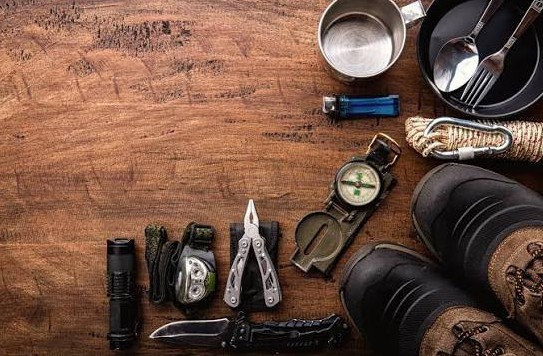
A dark house is not a dangerous house. It is an unlit one, and almost everything that goes wrong during a long outage is opportunistic rather than deliberate.
What actually happens at a dark house?
Doors get left unlocked, generators walk off, and somebody trips on a stair they have used for ten years. In that order of frequency.
Across nine ice storms the calls I heard about were dull. An unlocked garage side door because somebody was carrying wood in and out all evening. A generator gone from a front yard by morning. A twisted ankle on unlit basement steps. Nobody I worked near had the confrontation that people picture when they think about security, and planning for the picture instead of the pattern is how households end up with the wrong preparations entirely.
Light does most of the work
Lighting the outside of a house is the single most effective thing available, and it does not need mains power to do it.
- Solar path and porch lights. They charge during the day regardless of the grid, and they make a dark street look occupied.
- One battery lantern per level, left on low. Visible from outside, and it stops people navigating stairs by phone screen.
- Headlamps rather than handheld torches. Two free hands is a safety measure before it is a convenience.
- A charged phone as a last resort only. Using it for light is how households arrive at hour twenty with no way to call anyone.
Expert note from Dan Brackett, founder and former distribution lineman
Chain the generator to something that does not move and put it where you can hear it, which is also twenty feet from every window. Half the generator thefts I heard about were from front yards where the noise was deliberately kept away from the bedrooms. You cannot have it quiet and watched at the same time.
Which risks are worth preparing for?
Rank them by how often they occur rather than by how frightening they sound. The ranking is not intuitive.
| Risk | How often it comes up | What actually prevents it | What people buy instead |
|---|---|---|---|
| Falls and injuries in the dark | Every long outage | Lanterns on every level, headlamps, taped stair edges | A brighter torch |
| Carbon monoxide | Every cold snap somewhere | Detectors with battery backup, generator 20 feet out | Nothing, until it is too late |
| Opportunistic entry through an unlocked door | Common | A door check at dusk, done by one named person | A camera that needs the internet |
| Generator or fuel theft | Common in extended outages | Chain, position, and hearing it | Insurance, afterwards |
| Confrontation with a stranger | Rare | Being somewhere else, and neighbours who know you | Almost everything else |
The trade worth naming is that almost every measure that makes a house look occupied also makes it harder to keep warm and dark for sleeping. Households end up choosing between a lit exterior and a sealed, curtained interior. Do both, in different places: light outside, seal one interior room.
The neighbour problem, which is really a neighbour advantage
The households that do best in a long outage are the ones whose neighbours know their names. It is not sentiment, it is coverage.
- Before anything happens, learn who on your street is over 70, who is on oxygen or dialysis, and who has small children.
- Agree one thing: a porch light or a piece of tape on the door means all is well here.
- Agree a second thing: who checks on whom, by name, so the check actually happens.
- Share one number each, on paper, so the plan survives a dead phone.
A street near us ran this after the 2021 freeze. In the 2025 storm the check took eleven minutes and found one house with a failed heater and an 82 year old in it. That is the entire return on the arrangement, and the arrangement cost four conversations in a driveway in June.
Expert note from Renata Sowell, water and evacuation editor
Register anyone in the house with a medical dependency on power with your utility, and do it now. Most utilities keep a priority list, most households do not know it exists, and it is the closest thing to a real advantage available to a private citizen during a restoration.
What is not worth your attention?
Fortification. Sandbags against a threat that statistically does not arrive, while the stairs stay dark.
- Cameras that need the internet. During the event they see nothing and record nowhere.
- Anything that blocks your own exit. Fire and carbon monoxide are the risks that actually rise during an outage.
- Stockpiling that gets talked about. The households with a problem were, in every case I heard of, the ones who had told people what they had.
The first hours of an outage set most of this up, and the order to do things in is in what to do in the first four hours of an outage. Federal guidance on outages, including generator placement, is at Ready.gov.